
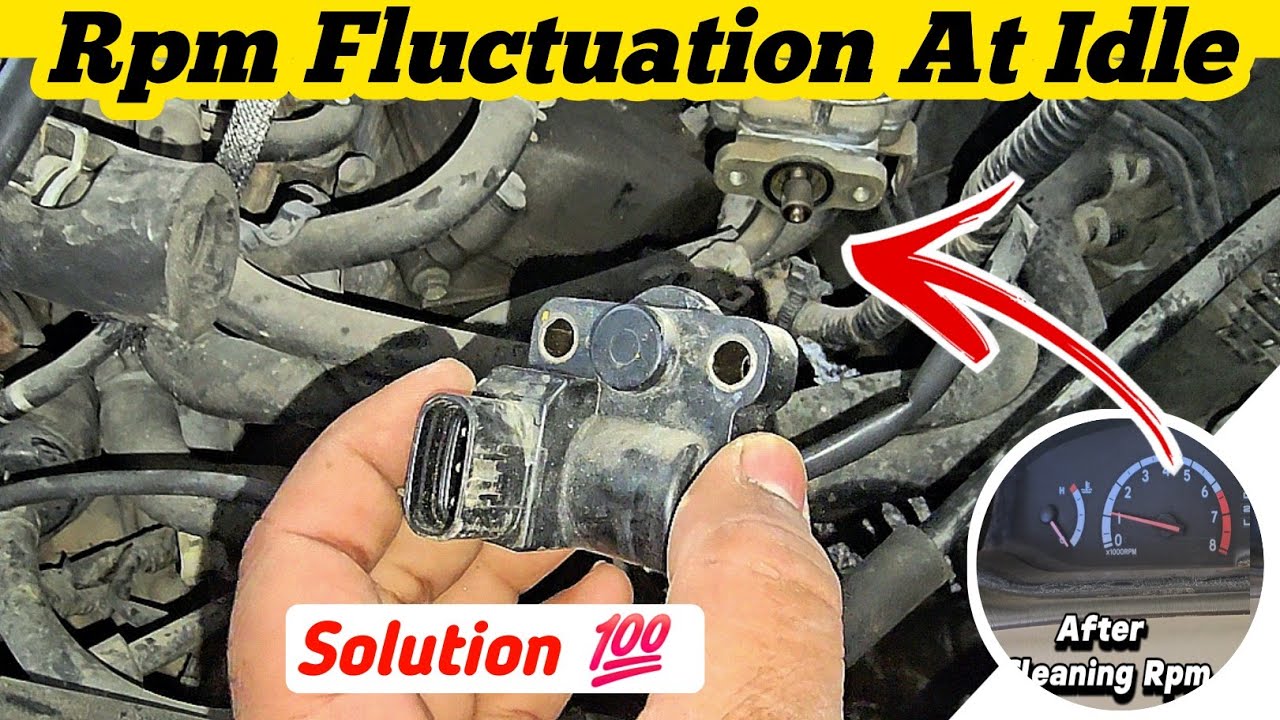
ISUZU’s 4JJ1 and 4JB1 diesel engines are widely respected for their durability, fuel efficiency, and long service life. Found in NPR, D-Max, MU-X, and various commercial models, these engines are known to run flatly even under demanding environments. But one issue that partners frequently encounter is doubtful idle or vacillating RPM, especially when the transformer is warm, under load, or during air-conditioning movement. While the engines themselves wait strong, their ineffective control systems may be sensitive, and a limited issue can quickly bring about rough idling, shaking, or even stalling.
Understanding the honest causes behind these idle fluctuations helps owners come back early, avoid avoidable part replacements, and maintain the engine’s long-term dependability.
Why ISUZU Engines Depend Heavily on Electronic Idle Control
Both the 4JJ1 (common-rail turbo diesel) and 4JB1 (mechanical or electronic variants) rely on exact fuel delivery to uphold a stable ineffective. Modern diesel engines do not simply “idle depressed”; they use sensors, vacuum orders, and electronic inputs to uniformly adjust fuel portion.
Any disruption in air, fuel, or sensor response causes the ECU to overcorrect, creating the well-known hunting idle, place RPM moves up and unhappy repeatedly.
The more advanced the fuel system, the more impressionable it becomes — and the 4JJ1 exceptionally requires perfect sensor readings to maintain idle constant.
Common Causes of Idle Fluctuation on ISUZU 4JJ1 & 4JB1 Engines
-
Vacuum Leaks on 4JB1 Mechanical Variants
Older 4JB1 transformers (mechanical drain type) use vacuum lines to control start-up functions and timing adaptations. You can also visit shops for Auto Repair in Yonkers, NY.
Cracked hoses or leaking fittings bring about:
- Low idle
- Unstable RPM
- Weak engine response
Since emptiness issues are hard to spot visually, technicians like Hughes Motors Corp Auto Repair often use fume testing to find leaks.
-
Diesel Injector Wear or Improper Calibration
On the 4JJ1, injectors must deliver exact fuel quantities. When injectors wear or clog, the ECU reduces or increases fuel delivery speedily to stabilize worthless — which causes the RPM to rise and fall.
Early signs of injector issues include:
- Hard starting
- Excessive engine knock
- Uneven idle
Ignoring this can one day damage pistons or cause oil dilution.
-
Idle-Up System Failure (AC or Power Steering)
Both 4JJ1 and 4JB1 engines contain an idle-up arrangement that raises RPM when:
- Air-conditioning is turned on
- Power steering loads increase
- Alternator load is high
When the ineffective-up solenoid or sensor fails, the ECU cannot compensate for the additional load, causing:
- Sudden dips in RPM
- Engine shuddering
- Momentary hampering
A malfunctioning AC compressor clutch can again cause RPM to surge repeatedly. You can also consult with experts like Hughes Motors Corp Auto Repair.
Conclusion
By labeling the causes early — and servicing parts like EGR valves, sensors, filters, and idle-up arrangements, owners can maintain their ISUZU engines running flatly for hundreds of thousands of kilometers.