
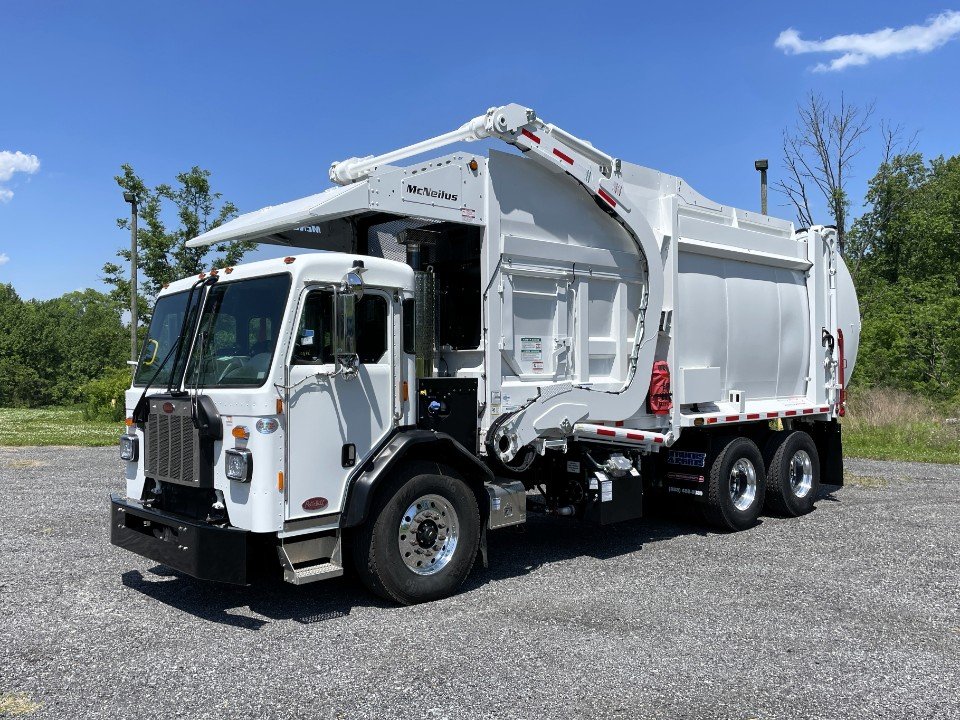
Selecting a refuse truck is a major decision for waste management companies, municipalities, and commercial haulers. The vehicle must match the containers being collected, the volume and weight of waste, the route layout, and the fleet’s maintenance capabilities. A truck that performs well on one route may not be the most practical choice for another.
McNeilus front loaders offer different configurations for demanding commercial and residential collection applications. The Atlantic Series and Meridian are two options that fleet managers can compare when evaluating capacity, weight, durability, and operating requirements. Understanding their differences helps buyers choose equipment based on practical needs rather than relying on a single specification.
Begin With the Collection Application
Before comparing models, define the work the truck will perform. A fleet serving large commercial dumpsters may have different requirements from one collecting waste at smaller businesses or mixed commercial and residential locations.
Important factors include the number of stops, expected waste volume, typical container weight, pickup frequency, route length, and access conditions. Managers should also consider the type of waste collected, since dense materials can reach weight limits before the body is full.
Site conditions are equally important. Narrow entrances, overhead obstructions, tight turns, and shared loading areas can affect whether a particular truck can operate safely. A route assessment helps identify these constraints before a purchase is made.
Comparing the Atlantic Series and Meridian
McNeilus offers the Atlantic Series as a heavy-duty front loader designed for demanding collection routes. The Meridian is positioned as a lighter-weight configuration that balances strength and versatility for commercial and residential applications.
The Atlantic Series is available in listed body capacities of 36, 40, 43, and 45 cubic yards. Meridian options include 32, 36, 40, and 43 cubic yards. Actual availability depends on the selected configuration, so buyers should confirm current specifications with the supplier.
These capacity ranges are only one part of the comparison. Fleet managers should also examine vehicle weight, chassis compatibility, lifting equipment, payload limits, and service requirements. The most appropriate model is the one that matches the intended workload and operating environment.
Evaluate Lifting Capacity
Front loaders use lifting equipment to raise compatible containers and empty their contents into the refuse body. The lifting system must be suitable for the container design and the loads encountered on the route.
The Atlantic Series and Meridian feature arms rated for lifting loads up to 10,000 pounds, subject to the exact model and configuration. Buyers should verify the applicable specifications and confirm that the selected truck can safely handle their containers.
Container weight can vary significantly according to the waste material. Dense refuse, wet waste, or improperly loaded containers may create different challenges from lightweight packaging. Operators must follow the manufacturer’s instructions and never exceed the vehicle’s rated limits.
Consider Vehicle Weight and Payload
Body volume measures the amount of space available for waste, while payload relates to the weight that can be carried within the vehicle’s limits. These measurements should not be treated as interchangeable.
A larger body may be useful for bulky, lower-density materials, but dense waste may reach the legal payload limit before the body is full. A lighter-weight truck may offer advantages in certain applications, but its suitability still depends on the route, chassis, body specifications, and operating requirements.
Fleet managers should review the truck’s weight ratings, axle limits, and local regulations before choosing a configuration. They should also consider how often the vehicle will need to unload and whether the route’s waste volume justifies a larger body.
Compare Durability and Serviceability
Refuse trucks experience repeated lifting and packing cycles, so component durability is an important factor. McNeilus front loaders come standard with Excalibre packing cylinders featuring a tool-steel shaver and nitrided rods designed to resist wear and corrosion and help reduce hydraulic contamination.
Both product lines also feature a clean headframe design intended to improve serviceability and protect hydraulic and electrical components. These design features can be useful in demanding operating environments, but maintenance remains essential.
Buyers should ask about routine service requirements, inspection points, replacement components, and the availability of technical assistance. A truck’s long-term value depends partly on how easily it can be maintained and how effectively the fleet responds to service needs.
Assess Controls and Diagnostic Technology
Some McNeilus front loader configurations offer the McNeilus CODE controls system, which provides diagnostic and troubleshooting capabilities. The exact functions depend on the selected model and specification.
Diagnostic features can help technicians investigate certain faults, but they do not replace physical inspections or qualified repairs. Fleet managers should consider whether their maintenance team has the training and resources to use the available technology effectively.
Operators also need model-specific instruction on controls, lifting procedures, warning indicators, and safe operation. Training should be part of the total equipment plan.
Consider the Total Cost of Ownership
The purchase price is only one part of the cost of operating a refuse truck. Fleet managers should also consider fuel or energy, scheduled servicing, replacement parts, labor, insurance, training, and downtime.
A lower-cost truck may become expensive if it is poorly matched to the route or creates frequent maintenance challenges. Similarly, a more capable configuration may not offer sufficient value if the fleet does not need its additional capacity or features.
Comparing realistic operating costs helps managers select equipment that fits their budgets and service expectations. They should also review warranty conditions and confirm the support available for the chosen model.
Review Parts and Service Support
Parts availability can affect how quickly a vehicle returns to service after a repair. Fleet managers should understand how to identify components, contact parts specialists, and arrange maintenance before a breakdown occurs.
Atlantic Heavy Duty offers information about McNeilus front loaders and parts support for refuse vehicles. Buyers should verify the service territory and support arrangements applicable to their location and selected configuration.
Keeping vehicle details and maintenance records organized can help service teams assess requests more efficiently.
Conclusion
Comparing McNeilus front loaders requires a balanced review of body capacity, lifting capability, vehicle weight, durability, diagnostics, maintenance, and total ownership costs. The Atlantic Series and Meridian offer different approaches to commercial and residential collection, so the right choice depends on the fleet’s workload.
By evaluating actual routes and verifying specifications before purchase, fleet managers can make better-informed decisions. Atlantic Heavy Duty can help prospective buyers explore available options and consider the parts and service support required for long-term fleet performance.